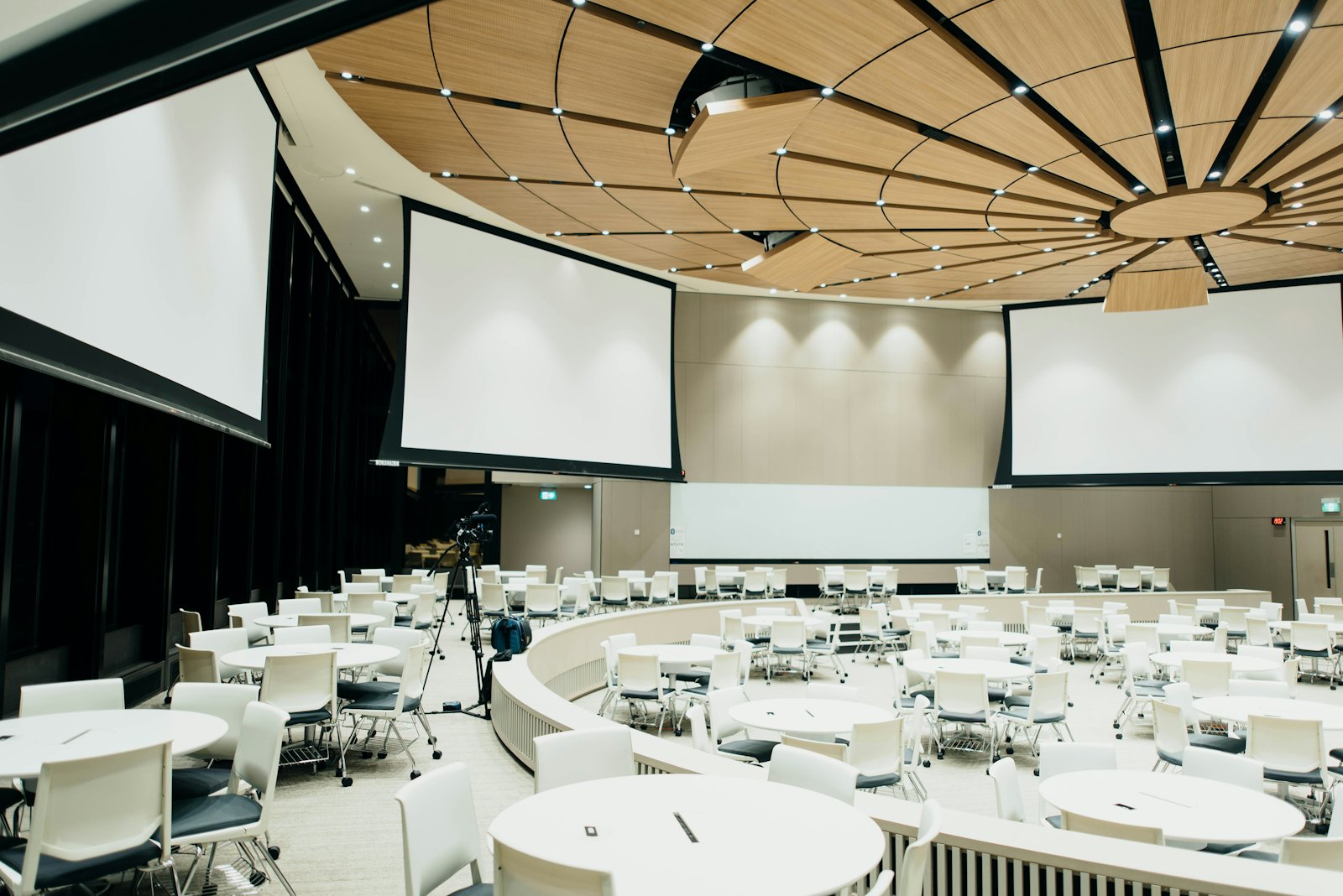
Three days in Brussels are over. Odoo Experience 2026 (24-26 September, Brussels Expo) was again the largest open-source business software gathering in Europe: more than 400 exhibitors, 400+ talks, seven master classes and, as every year, the premiere of the new version. This time, Odoo 20.
What to know when you sit down on Monday morning
The short version: the story of Odoo 20 is not a list of features. It is that AI stops being a demo and becomes part of the system, changing how the daily work is divided.
- Agentic automation. AI agents can now update themselves and be triggered by automated actions; they create and edit records, generate images and filter by time period. What used to be called topics are now skills.
- People answer with a button, not a sentence. The agent asks, the person clicks. That leaves far less room for error than free text.
- Voice input. Requests can be dictated to an agent, which is more than a convenience in a warehouse or on a shop floor.
- AI runs on IAP credits. This is the paragraph for the finance director: the AI features are credit-based, so the cost is variable and only predictable if the usage is measured.
Platform changes that will land in implementation projects
- Simplified access rights - record rules are gone. Any project with a custom permission model needs that reviewed before the upgrade, not after.
- Offline mode - records can be created, edited and deleted while disconnected.
- Font Awesome replaced by Material Symbols - every custom module and report template with hand-written icons needs a pass.
- Mobile - redesigned login screens and touch-first forms.
By module, briefly
- Accounting: depreciation models replace asset models, bills paid straight from Odoo over PISP, better multi-ledger consolidation.
- CRM: lead generation from the Dun & Bradstreet database and a pipeline switcher for comparing teams.
- eCommerce: inventory without the separate Inventory app, automated cross-sell suggestions and a returns portal.
- HR: bulk appraisal actions, external 360 feedback from any contact, parent goal progression.
- Inventory: product creation by barcode, bulk lot generation and pre-encoded package contents.
- Appointments: rescheduling in a few clicks, automatic resource assignment and booking capacity control.
Pricing: the first rise in four years
This is the part a finance director will read first. Odoo’s official announcement to customers confirms the first price change in four years, effective 24 September 2026:
- One App Free - no change: one app, unlimited users.
- Standard - no change.
- Custom - up 20%, which Odoo points out is less than the 26% inflation since 2022. In the Belgian list announced in Brussels, that is from 29 EUR to 35 EUR per user per month.
- Light User - a new, cheaper user type from Odoo 20 onwards (more below).
Who pays what, and from when:
- New extra users on the Custom plan are billed at the new price straight away.
- Users already in your contract follow section 5.2 of the subscription agreement: at renewal the price rises by at most 7% per year, depending on your agreement version.
- Monthly customers see the new Custom price on their next invoice; Light User pricing applies once the database is upgraded to Odoo 20.
About the numbers: Odoo prices by country. At the time of writing, our region’s list shows Standard at 11.90 EUR billed yearly (14.90 EUR monthly), Custom at 22.90 EUR billed yearly (27.90 EUR monthly) and a Light User at 4.90 EUR. Open your own country’s pricing page before budgeting.
Light User: who it is for
Odoo counts as a light user any active user marked as “Light User” in Odoo 20 or later, and any active employee record in the HR app that is not linked to a full (non-portal) user account.
What a light user can do:
- As a user: My Time Off, My Expenses, My Appraisals, My Attendances, My Referrals, My Planning, Field Service, Inventory Barcode Operator and read-only Knowledge.
- As an employee: My Payslips, the Point of Sale and the Manufacturing Shop Floor.
Both conditions must be met: the database runs Odoo 20 or later (light user features do not exist in Odoo 19), and the company has signed the new enterprise agreement. If either is missing, every user is billed on the Custom or Standard plan.
For warehouse, shop-floor, field and point-of-sale teams this can change the bill more than the 20% rise itself, so it is worth counting who in your company really needs a full licence.
Two things change the shape of the bill more than the list itself:
- Agentic AI sits in the Custom plan, not Standard. Agent automation now comes with the very plan whose price went up.
- AI usage runs on IAP credits, separately from the subscription. That is a variable cost the budget did not carry before, and it can only be planned if the credits each process consumes are measured.
Our advice: before upgrading to Odoo 20, price both scenarios - the team on Standard without agents, and on Custom with agents plus the forecast credits - and check how many of your people could be Light Users. Often the answer is to switch agents on for part of the team only.
What changes for implementers
When you can upgrade: Odoo 20 is already available on Odoo Online and Odoo.sh for new databases. Odoo is still battle-testing its upgrade tools and expects to release the upgrade platform by the end of November 2026, with a test mode earlier. For existing databases that means planning the move for December at the earliest.
This is the part that costs hours rather than euros. Odoo 20 touches things that have been taken for granted for years:
- Record rules are gone. Permissions are now a domain set directly on the access right, in two kinds: Permission (behaving as OR) and Restriction (behaving as AND, for boundaries such as multi-company). Every custom module still shipping ir.rule records has to be rewritten. It is the single largest migration job in this release.
- The Field Service app is discontinued - its features now live inside Planning, together with technician maps, optimised routing, travel fees and maintenance-contract coverage.
- In payroll, work-entry and time-off types are merged, and contract dates can no longer be edited if the change would alter existing payslips.
- In accounting, parent accounts replace account groups, account codes become optional, asset models become depreciation models, and payment statuses are renamed (from Paid to Reconciled).
- Icons and UI. Font Awesome is replaced by Material Symbols and stored UI values are removed, so every custom template with a hand-written icon needs a pass.
- Owl 3 - the next version of Odoo’s JavaScript framework, with a reactivity system built on signals and a plugin architecture. Front-end customisations should budget for it early.
New industry packages: interior design, electronics refurbishment (with VAT margin scheme), community care, physical therapy, pet grooming, catering, vineyards and more. Construction Builder is renamed General Contractor, and Construction Developer becomes Property Developer, rebuilt on standard Manufacturing and Inventory.
The commercial terms of the partnership agreement did not change: the document is still the 2023 edition, with the same tier thresholds and commissions.
What changes in our region
Odoo 20’s release notes list country-specific changes for more than 50 localisations. For the markets we work in, the list is short:
- Lithuania: in payroll, existing fields and other inputs have been converted to the new salary input flow. Check custom payroll rules and reports before upgrading.
- Peppol: delivery contacts can now carry a GLN (global location number) for Peppol e-invoicing. That matters wherever invoices go through Peppol, for example in Belgium, the Nordic countries and increasingly Germany.
- Latvia, Estonia, Poland, Germany, Denmark, Sweden, Norway, Finland and Ukraine: no country-specific changes in Odoo 20. The general changes above (permissions, accounting, payroll, icons) still apply, and the local accounting and VAT modules need the usual regression test after the upgrade.
Company news and 2027
- 2026 revenue of about 900 million euros, growing 45%. The billion-euro target for 2027 stands.
- Nearly 8,000 employees today, with a plan to reach 10,000 by 2027.
- Two new subsidiaries opened in the first half of the year - in the Philippines and France.
- To the press, Fabien Pinckaers put the company’s value at 10 billion euros - what investors would be willing to pay - and added that he is not selling. That was said in interviews, not in Odoo’s official recap.
- HR and payroll with Partena Professional is the 2027 goal; the partnership was announced back in April, and Odoo 20 already ships the Belgian payroll pieces.
- E-invoicing stays a priority: Odoo follows each European country’s requirements and cut-off dates, with 2030 as the EU horizon.
Where we are moving
Our conclusion from Brussels is simple: the coming year will not be won by whoever bolts AI onto existing processes fastest, but by whoever has prepared the data and the permissions for it. An agent that writes records is only as good as what it reads, and only as safe as the limits set around it.
So our plan for clients has three steps:
- A permissions audit before the upgrade. With record rules gone, the old model has to be rewritten deliberately rather than migrated blind.
- An inventory of customisations. Icons, views and anything touching the removed structures get tested off production first.
- AI with a measurable boundary. Start with one process where an agent clearly pays, measure the IAP credit usage, and only then widen it.
If you are planning the move to Odoo 20, or want to know what agentic automation would do for your own processes, let us talk - the consultation is free.